Services
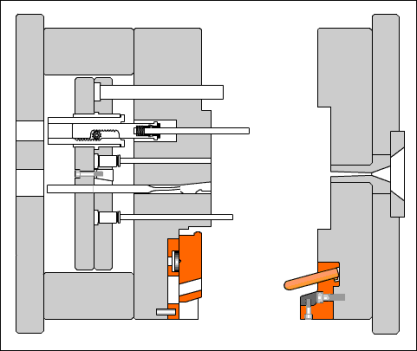
Types of Customized Molds Development
We offer more than just injection molding services. Based on customer needs, we provide comprehensive services, from product part design improvements to mold design and manufacturing, and injection molding production. Furthermore, we provide ongoing product upgrade services tailored to customer requirements.
Mold Flow Analysis
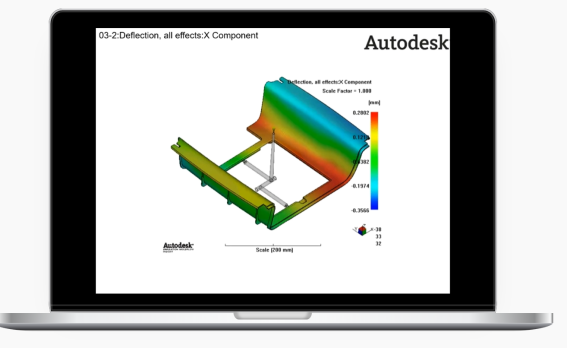
The Engineers use mold flow analysis to optimize gate location, cooling system design, and process parameters, and to predict potential defects such as weld lines, warpage, and voids before mold production.

Mold manufacturing
Based on a comprehensive consideration of part structure, materials, and cost, we determine the optimal number of cavities and select appropriate hot and cold runner systems to meet customer requirements. Tolerances are strictly controlled to +/- 0.001 inches. 100% pre-shipment inspection. Mold manufacturing cycle: 15 to 30 days. Highly trusted by numerous companies for our reliable service.

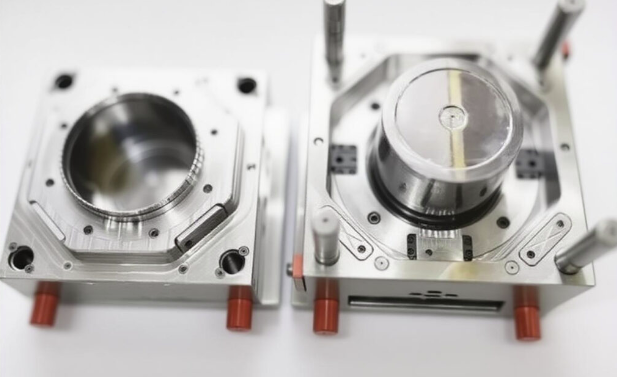
Single-Cavity Molds
Ideal for prototype validation and low-volume production, our single-cavity molds deliver exceptional dimensional accuracy for geometrically intricate parts. Utilizing premium tool steels, we ensure superior surface finishes and extended service life.
Multi-Cavity Molds
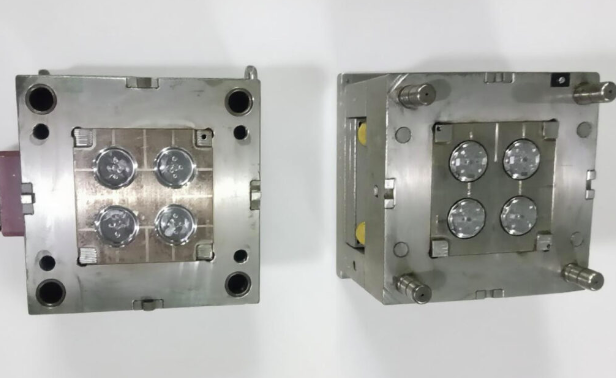
Engineered for mass manufacturing , our multi-cavity moldsfeature balanced runner systems and conformal cooling to achieve short cycle time. Integrated hot runner tech educes scrap rate to 1%,Our multi-chamber injection molds ensure more efficient utilization of cycle time while offering lower unit part costs.
Overmolding Molds
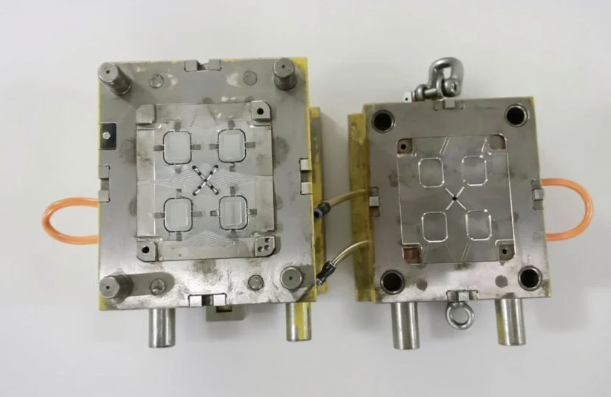
Used for multi-material or multi-color part production, overmolding molds enable the integration of different materials or features in a single molding cycle, enhancing product functionality and appearance
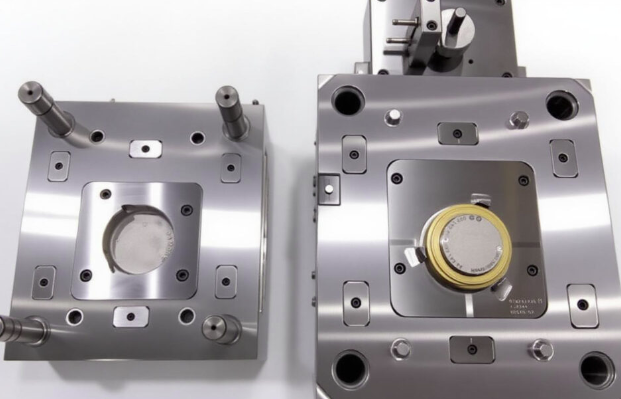
Aluminum/Zinc Die Casting Molds
Experience rapid production of robust metal components with our die casting molds. These specialized tools deliver exceptional value by significantly reducing manufacturing time compared to traditional methods, while maintaining consistent accuracy for fine details like textures and logos.
| Product Name | Customized Mould | Runner System | Hot runner,cold runner |
|---|---|---|---|
| Mould Material | SKD61.8407.H13.2344.DAC,W302 etc. | Side gate etc. | Spree Type |
| Surface treatment | Sand casting, chemical corrosionmatt, polishing,sparkerusion, photoetched etc | Mould Standard | MISUMI, HASCO DME, LKM |
| Mould cavity | Single, Multi-cavity, or1+1 in one mold. | Product Material | ADC3、A360、 B390、ADC14、ADC6、ADC-12,etc |
| Mould life | 300,00-1,500.00shots | Design Software | Solidworks, Pro-EUG, CAD etc. |
| Tolerance | 士0.02mm~士0.05mm | Drawing format | IGES, STEPAutoCAD, Solidworks.STL, PTC Creo, DWG.PDF, etc. |
Introduction to Injection Molding Materials
1. Thermoplastic plastics: These soften and melt when heated, solidify upon cooling, and can be processed repeatedly. They account for over 90% of injection molding materials.
| Category | Typical Materials | Density (g/cm³) | Melting Point / Heat Distortion Temp (°C) | Key Properties | Typical Applications |
| General Plastics | PP (Polypropylene) | 0.90~0.91 | 167/100 | Good chemical resistance, lightweight, low cost | Daily necessities, automotive parts, pipes |
| PE (Polyethylene) | 0.92~0.96 | 130-135/80 | Good toughness, low temperature resistance | Packaging films, containers, toys | |
| PVC (Polyvinyl Chloride) | 1.30~1.45 | 80-85/70 | Good toughness, acid and alkali resistance | Pipes, profiles, cable sheaths | |
| PS (Polystyrene) | 1.04~1.06 | 240/90 | Transparent, easy to process, rigid | Stationery, appliance housings, packaging | |
| Engineering Plastics | ABS (Acrylonitrile-Butadiene-Styrene) | 1.04~1.06 | 105-110 | High impact resistance, easy to plate, good molding | Appliance housings, automotive interiors, toys |
| PC (Polycarbonate) | 1.2 | 220/130 | High transparency, impact resistance, heat resistance | Optical components, safety helmets, baby bottles | |
| PA (Nylon) | 1.13~1.15 | 220-260/80-100 | Wear-resistant, high strength, wear-resistant | Gears, bearings, automotive parts | |
| POM (Polyoxymethylene) | 1.41~1.43 | 175/100 | Wear-resistant, fatigue resistant, solvent resistant | Gears, bearings, electronic components | |
| PBT (Polybutylene Terephthalate) | 1.31~1.33 | 225/150 | Heat resistant, good chemical resistance, electrical insulation | Electronic connectors, automotive parts | |
| Special Engineering Plastics | PEEK (Polyetheretherketone) | 1.3 | 343/160 | High temperature resistance, corrosion resistance, high strength | Aerospace components, medical devices |
| PI (Polyimide) | 1.40~1.50 | 400+/260 | Extremely high heat resistance, radiation resistance, corrosion resistance | Electronic components, semiconductor devices | |
| PPS (Polyphenylene Sulfide) | 1.34~1.36 | 280/200 | Flame resistant, chemical resistance, dimensional stability | Electronic components, automotive engine parts |
2. Thermosetting Plastics: These plastics solidify irreversibly upon heating, exhibiting excellent heat resistance and rigidity, but cannot be reprocessed.
Typical materials: Epoxy resin (EP), Phenolic resin (PF), Polyurethane (PU), Unsaturated polyester (UP)
Performance characteristics: High temperature resistance, high rigidity, good dimensional stability
Application scenarios: Electrical components, automotive interior parts, composite materials, insulation parts
3. Elastomers: Possessing characteristics of both plastics and rubber, they exhibit rubber-like elasticity at room temperature and can be melted and processed at high temperatures.
Typical materials: TPU (thermoplastic polyurethane), TPE (thermoplastic elastomer), TPR (thermoplastic rubber)
Performance characteristics: High elasticity, wear resistance, low-temperature resistance
Application scenarios: Sealing strips, floor mats, handle covers, children’s toys
Our Services
Types of Machining Services
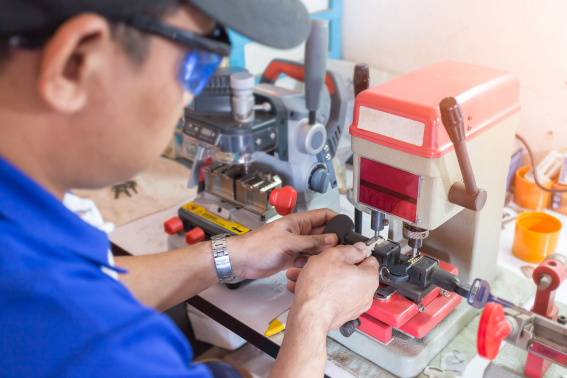
We offer a full spectrum of custom machining solutions to meet diverse precision manufacturing needs. Our advanced equipment and skilled team enable us to deliver high-quality metal and plastic parts for various industries.

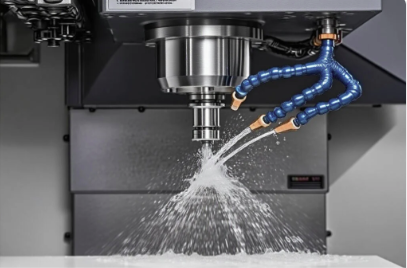
CNC Milling
Utilizing computer-controlled cutting tools, CNC milling creates complex shapes, contours, and features with exceptional accuracy. Ideal for both prototyping and mass production of components with tight tolerances.
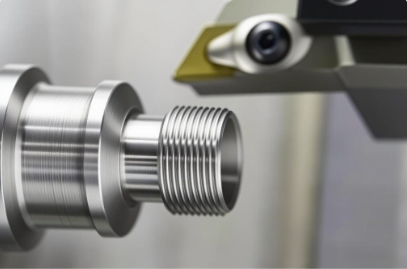
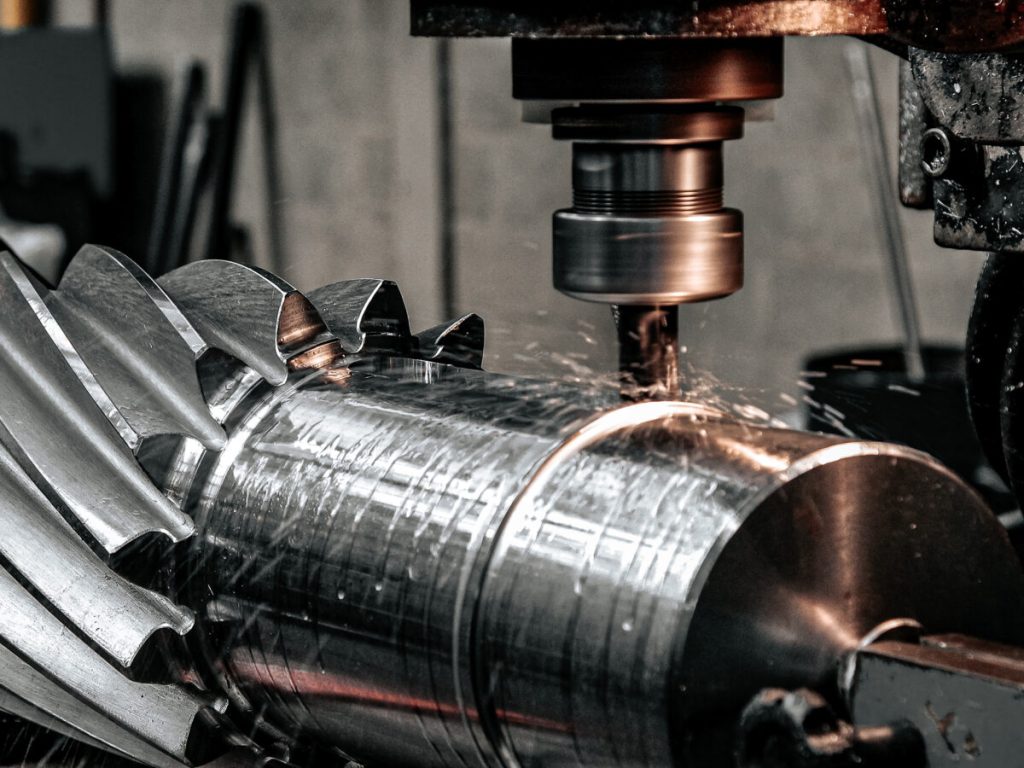
CNC Turning
CNC turning is used to produce cylindrical or round parts by rotating the workpiece against a cutting tool. This process is perfect for shafts, bushings, and threaded components requiring precise diameters and finishes.
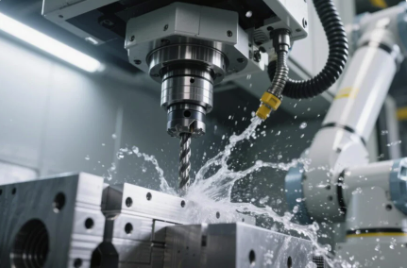
Precision Drilling
Advanced multi-axis CNC technology delivers burr-free, high-tolerance holes in hardened tool steels for mission-critical components, ensuring superior surface integrity and production efficiency.
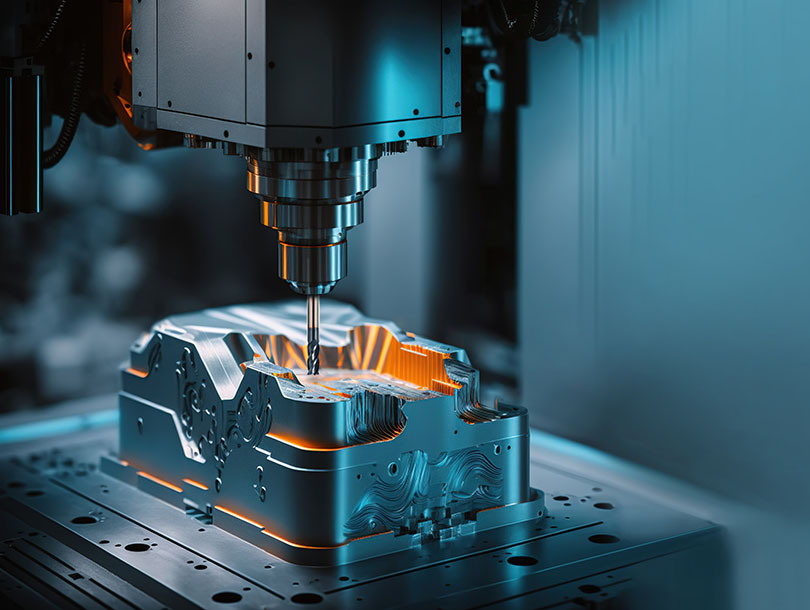
3-Axis Milling
3-axis CNC milling involves cutting along three linear axes: left-to-right, back-and-forth, up-and-down. Easy to program and operate, 3-axis mills are effective for simple geometric designs and can be used for a wide variety of parts.
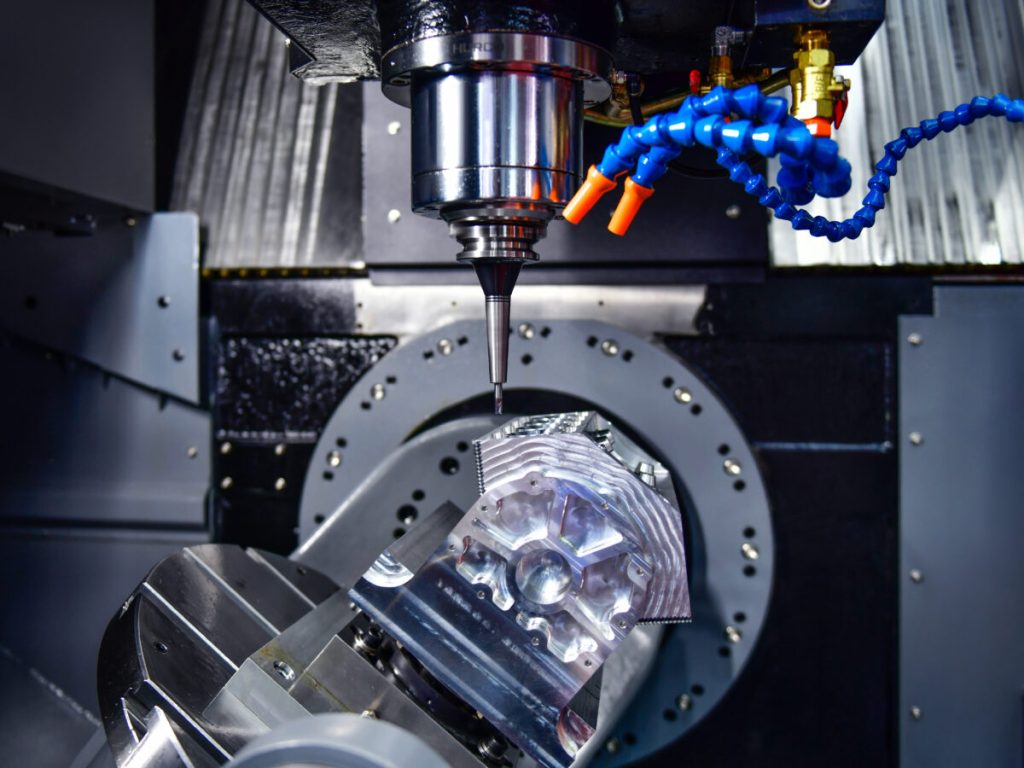
5-Axis Milling
5-axis CNC milling expands the design potential of the machining process by adding two axes of movement. With no need to reposition between operations, 5-axis milling allows for faster production of more complex parts.
CNC Turning
CNC turning involves the application of a cutting tool to a rotating blank workpiece in order to shape a desired part. During production, the workpiece spins on vertical or horizontal axes while the automated lathe moves around it. Precise, repeatable and scalable, CNC turning is ideal for creating parts with simple geometries in rounded or cylindrical shapes.
| Technology | Materials | Lead Time | |
|---|---|---|---|
| CNC Machining | Plastic: ABS, Acetal (Delrin), Nylon 6, Nylon 30%GF, HDPE, PEEK, PC, PTFE (Teflon), PVC, UHMW Metal: Aluminum (2024, 6061, 6082, 7050, 7075), Stainless Steel (303, 304, 316, 17-4, 420), Other Steel (Mild Steel, Alloy Steel, Tool Steel), Other Metals (Brass, Copper, Titanium) | Eight to 10 business days for orders of <50 parts |
Our Services
Types of Stamping and forming
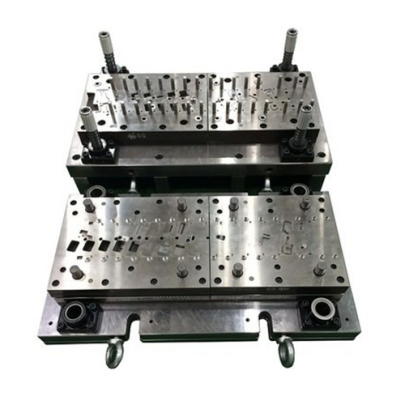
We design or improve sheet metal products according to customer needs, rationally design sheet metal molds and tooling, and manage the entire process from mold manufacturing to mass production.
Process Analysis
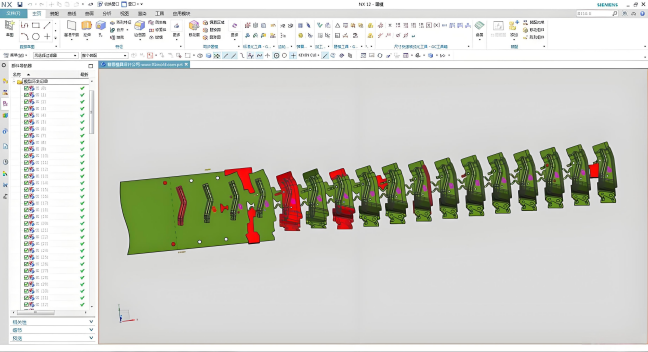
Based on the part shape, dimensional accuracy, and surface quality requirements specified in the stamping part drawings, engineers select the specific mold structure and a reasonable layout, and determine the mold manufacturing precision.


Mold Manufacturing
Based on comprehensive consideration of part structure, materials, and cost, we develop reasonable solutions to meet customer needs. Tolerances are strictly controlled to +/- 0.001 inches. 100% pre-shipment inspection. Mold manufacturing cycle: 15 to 30 days. Highly trusted by leading companies for our reliable service.
Comparison of Dies, Materials and Forming Machines | ||||
| Type | Die/Mold | Material | Forming Machine | Suitable |
| Single-Operation Die | Single die Relatively simple | Cutting or stretched metal sheet | Single-operation dies are fixed inside the forming machine | Suitable for products with simple structures and small order quantities |
| Progressive Die | Progressive die Contains multiple dies | Coils, iron buckets Coils or iron buckets come with the die | Progressive dies are fixed inside the forming machine | Suitable for large-volume orders |
| Multi-Station Automatic Press Die | Single die | Cutting Cutting is processed individually by single dies | Multiple dies are fixed inside the forming machine at once. The forming machine is equipped with loading robots. | Suitable for complex structures and large-volume orders. |
Steel Plates Materials Table | ||||||
| Classification | Material | Symbol | Basic Thickness (mm) | Standard Size Example | Specific Gravity | |
| Steel Plates | Cold Rolled Steel Sheet | SPC | 0.9~1.6 | 914 × 1,829 1,219 × 2,437 | 7.85 | |
| Steel Plates | Hot Rolled Steel Sheet | SPH | 1.6~4.5 | 914 × 1,829 1,219 × 2,437 | 7.85 | |
| Steel Plates | Surface Treated Steel | Tinplate | SPG | 0.9~1.6 | 914 × 1,829 | 7.85 |
| Steel Plates | Surface Treated Steel | Hot-dip Aluminum-coated Steel | SA1 | 0.9~1.6 | 914 × 1,829 | 7.85 |
| Steel Plates | Surface Treated Steel | Tinplate | SPT | 0.9~1.6 | 508 × 711 | 7.85 |
| Steel Plates | Stainless Steel | SUS 304 | SUS | 2.0~6.0 | 1,000 × 2,000 | 7.70 |
| Steel Plates | Stainless Steel | SUS 430 | SUS | 2.0~6.0 | 1,000 × 2,000 | 7.93 |
Non-ferrous Metal Plates | |||||
| Classification | Material | Symbol | Basic Thickness (mm) | Standard Size Example | Specific Gravity |
| Non-ferrous Metal Plates | Aluminum | A-P | 1.0~3.0 | Small plate: 400 × 1,200 Large plate: 1,000 × 2,000 | 2.71 |
| Non-ferrous Metal Plates | Copper Plate | Cu | 2.0 | Small plate: 365 × 1,200 Large plate: 1,000 × 2,000 | 8.89 |
| Non-ferrous Metal Plates | Brass Plate Type 1 | BsP | 2.0 | Small plate: 365 × 1,200 Large plate: 1,000 × 2,000 | 8.6 |
| Non-ferrous Metal Plates | Brass Plate Type 2-A | BsP | 2.0 | Small plate: 365 × 1,200 Large plate: 1,000 × 2,000 | 8.5 |
| Non-ferrous Metal Plates | Brass Plate Type 2-B | BsP | 2.0 | Small plate: 365 × 1,200 Large plate: 1,000 × 2,000 | 8.5 |
| Non-ferrous Metal Plates | Brass Plate Type 3 | BsP | 2.0 | Small plate: 365 × 1,200 Large plate: 1,000 × 2,000 | 8.4 |
| Non-ferrous Metal Plates | Phosphor Bronze Type 2 | PBP | 0.5 | Small plate: 100 × 1,000 Large plate: 180 × 1,200 | 8.81 |
| Non-ferrous Metal Plates | Phosphor Bronze Type 3 | PBP | 0.5 | Small plate: 100 × 1,000 Large plate: 180 × 1,200 | 8.80 |
| Non-ferrous Metal Plates | Phosphor Bronze Spring Use | PBP | 0.5 | Small plate: 100 × 1,000 Large plate: 180 × 1,200 | 8.80 |
Our Services
Design service
Innovative and Market-Ready Concepts
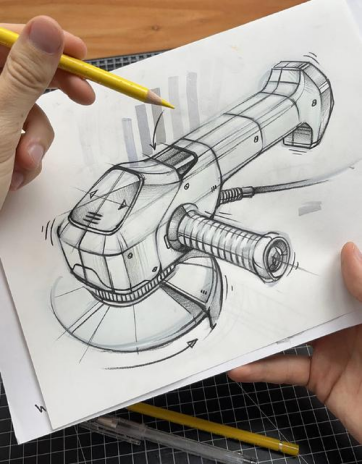
Dotzeno's product design and development services are rooted in creativity and innovation. By working closely with our team, you can transform initial ideas into innovative and market-competitive product concepts. We emphasize practicality and market viability, ensuring your ideas are not only imaginative but also feasible and functional. With Dotzeno, your ideas evolve from imagination into concrete concepts, ready for the next stages of design and production. This advantage allows you to begin your product development journey with powerful and well-considered concepts that have the potential to disrupt the market.


Cost-Effective Prototyping and Improvement
Our product development methodology includes iterative optimization through prototyping. This means your product will go through multiple rounds of feedback and refinement before entering the final production stage. By investing in this iterative optimization process early on, you can avoid costly mistakes and budget overruns in later production stages. This advantage not only saves you money but also ensures your product is well-received in the market, reducing the risk of product failure due to design flaws.
Comprehensive end-to-end support
Partnering with Dotzeno means receiving comprehensive support throughout the entire product development process. From initial concept to final mass production design, our team of experts is dedicated to ensuring your product meets and exceeds market expectations. We provide guidance, precision, and an unwavering commitment to quality and functionality. This advantage allows you to confidently navigate the complexities of product design, knowing you have a dedicated partner by your side every step of the way.